
Renewable energy simply means energy that comes from natural sources that do not run out easily. Nature keeps replacing them again and again. Because of this, they can be used for a very long time without being exhausted.
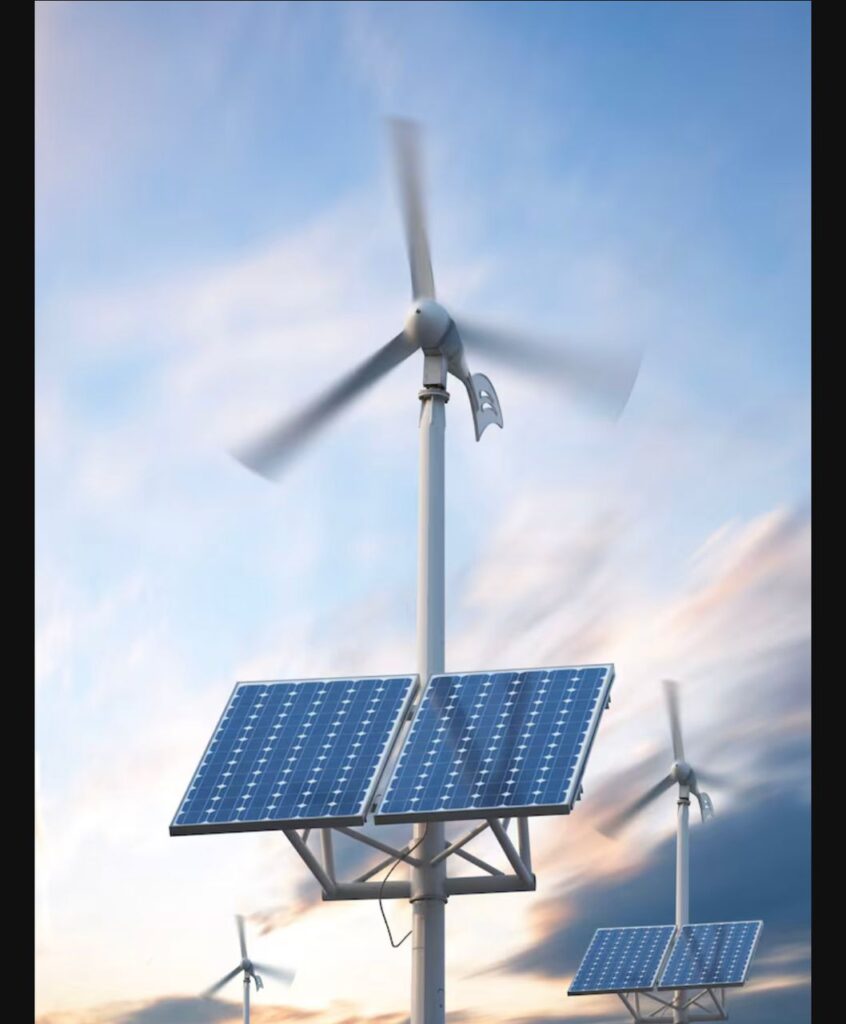
One of the most familiar examples is solar energy. Solar energy comes from sunlight. When sunlight hits solar panels, the panels convert that light into electricity. In many communities across Nigeria, solar panels now power homes, schools, and small businesses where the national grid does not reach.
Another example is wind energy. Wind turbines capture the movement of air and convert it into electricity. When the wind turns the blades of a turbine, it spins a generator that produces power.
Water can also generate renewable energy. This is known as hydropower. Large dams such as Kainji Dam produce electricity by allowing water to flow through turbines. As the water moves, it turns the turbines which generate power.
Renewable energy also includes biomass energy. This comes from organic materials such as plant waste, wood, or agricultural residue that can be used to produce heat or electricity.
The major advantage of renewable energy is sustainability. These energy sources are naturally replenished and produce fewer environmental impacts compared to traditional fuels.
As technology improves and the cost of equipment reduces, renewable energy is becoming more accessible to many communities. It is gradually becoming an important part of how countries power homes, industries, and transportation systems.